1. The Republicans have been accused of "turbo-charged" gerrymandering in order to hold on to their state and federal offices, and the two states which seem to critics to exemplify their approach are Pennsylvania and North Carolina. The New York Times provides, as might be expected, excoriating commentary on both situations, suggesting that Republicans are no longer just about holding power but about de-legitimising their opponents.
At stake are not just hundreds of state legislative seats, but also control of the House of Representatives, which Republicans currently hold by a 45-seat margin.
The most shocking case is playing out right now in Pennsylvania, where Republican lawmakers in 2011 created maps so skewed that when Democrats won a majority of the popular vote the following year, it translated into only five of the state’s 18 congressional seats.
But when the Pennsylvania Supreme Court struck down the districts, the Republicans were ready. After their appeal to the US Supreme Court was struck down by none other than Samuel Alito, they moved against the elected Pennsylvania judges:
A Republican legislator this week moved to impeach the five Pennsylvania justices who voted to strike down the maps, on the grounds that they “engaged in misbehavior in office.”
And if Pennsylvania sounds bad, how about North Carolina, where electors put a Democrat, Roy Cooper, into the state house as Governor, only to have the gerrymandered state legislature quickly strip the office of as many powers as possible before Cooper took office.
Democracy in America? Not going terribly well, it would seem.
2. Meanwhile, evangelicals continue to parade their support of Donald Trump.
America's fundamentalist protestant Christians have a habit of preferring non-religious presidents like Ronald Reagan and Donald Trump, both divorcees who could hardly be seen as exemplars of Christian teaching on marriage. In Trump, they have managed to find a leader to support who has committed serial ethics violations, engages in abusive personal tweets, and can rarely be found holding to truth.
Evangelical leaders claim they do not want to judge Trump as an individual, not a tolerance they held towards Bill Clinton, or to any American citizens who happen to be gay.
In abandoning any moral stance whatsoever, evangelicals have at least revealed their colours as a partisan pressure group which merely holds its religious statements up as an umbrella for its political activism, rather than as a serious set of principles to live by. Atheists must be delighted at their overt outing.
Dems still look good for mid-terms - WaPo
From the Washington Post's "Plumline" blog, some still optimistic points about the Democrats' chances in November:
* DEMS POUR MONEY INTO STATE LEGISLATIVE RACES: The New York Times reports that a Dem-aligned group led by former attorney general Eric Holder is set to pour big money into obscure state legislative races across the country in 2018:
The group [is] determined to deny Republicans so-called trifectas in state governments — places where a single party controls the governorship and an entire legislature … The group’s list of high-priority states includes most of the critical states in presidential elections.
Preventing total GOP control in as many states as possible could block lopsided pro-GOP congressional maps in the next decade and avoid a repeat of the last decade’s disaster.
* DEMS GRAB ANOTHER SEAT IN DEEP RED TERRITORY: Last night, Democrat Mike Revis won a special election for a state legislative seat in Missouri. Reid Wilson explains:
If Revis’s lead holds, it would mark a significant swing from 2016, when President Trump won the district by a 61 percent to 33 percent margin. Four years before that, Mitt Romney beat President Obama in the district, south and west of St. Louis, by a 55- to 43-percent margin.
It’s another sign of the energy on the Democratic side putting deep red territory in play, which continues to bode well for 2018.
* DEMS HOLD ADVANTAGE IN BATTLE FOR HOUSE: The punditry has swung toward a Trump/GOP comeback, based on the economy and Trump’s slightly rebounding approval. But National Journal’s Josh Kraushaar diagnoses the situation much more accurately:
If there’s one constant that strategists in both parties acknowledge, it’s that Democratic turnout will be sky-high, fueled by deep-seated antipathy towards Trump. … For Republicans to mitigate the impact, they need to persuade enough independent voters to support them and turn out their own voters in similar numbers. … They could hang on to many of their most-vulnerable seats, but still see the bottom fall out because of red-hot Democratic intensity and lackluster GOP preparation. It’s why Democrats still hold the edge in the battle for House control, even if the anti-Trump tsunami never materializes.
By the way, ignore the punditry that tells you Dems are overconfident. They know this is still very much up in the air and that there’s tons of work to be done.
(Greg Sargent)
Let the Brexiteers in
 The Sunday Times runs a piece today about the frustration of hard-Brexit minded Tory MPs, and their desire for a "dream team" of Johnson, Gove and - of course - Rees-Mogg, to come in and run things.
Remain minded Tories should probably consider the same thing. As Theresa May's government lurches around trying to find a strategy, or a vision, or anything at all, it becomes increasingly apparent that there is no value to the Remainer wing in her continued leadership.
Mrs. May's poor negotiating situation can be put down to her need to have been more Brexit than the Brexiters initially, in order to convince that wing of the party that this quondam (admittedly lukewarm) Remainer really could be trusted. Alex Wickham notes this point in his assessment of the depressed state of Brexiteers.
However, Mrs. May's own lack of vision for Brexit means she is caught between the two wings of her party. For every Johnson, there's a Hammond etc. Given the lack of control they have over the process, the Brexiters - exemplified by the increasingly frustrated outbursts from the non-governmental Jacob Rees-Mogg - will keep complaining that the outcome we are heading for is nothing to do with them. Nick Cohen skewers their responsibility avoidance strategy perfectly in his article for the Observer.
So it may be that the allegedly plotting Brexiteers should be given their time in power. They wanted this thing, campaigned energetically for it, and should now be given the chance to deliver it. That way, they can hardy avoid responsibility for the result, good or bad. Remainers can thus make their case more forcefully, unafraid of the charge of de-stabilising the government or the fear of getting someone worse. In effect, they would become the coherent, opposition group that the Brexiters currently are. And be ready to step in should the Three Brexiteers swashbuckle their way to disaster.
Lead or Go. Still discussing May

The conservative weekly "The Spectator" is influential - and widely read - in Conservative Party circles, so it can hardly be good news for May that its well-connected political editor, James Forsyth, has written the cover story under the stark demand that she "Lead or Go".
This debate doesn't seem to be getting any quieter, even as May is in China trying to secure trade deals. The BBC's Laura Kuenssberg commented on the febrile atmosphere in Westminster on this morning's Today programme (here, go to 1:09:06 for Nick Robinson's start), noting that Tory MPs were daily changing their minds about May.
The problem for Tory MPs, as I noted below and here, is their risk-averse caution. They don't want May but they hate the uncertainty of the alternative. May's leadership is flawed from top to bottom, but the parliamentary part she leads is riven through and through with factional strife, resulting in a ghastly stasis that is tipping the party into a state of catatonic inaction.
Michael Oakeshott was the pre-eminent 20th century philosopher of conservatism, and his analysis of 1951 might bear some re-considering. He described conservatives attitudes thus:
In political activity, then, men sail a boundless and bottomless sea; there is neither harbour for shelter nor floor for anchorage, neither starting-place nor appointed destination. The enterprise is to keep afloat on an even keel; the sea is both friend and enemy
Tory MPs today might want to consider whether they have taken to heart his final injunction:
The seamanship consists in using the resources of a traditional manner of behaviour in order to make a friend of every hostile occasion.
They are certainly facing a hostile occasion, but don't yet seem to have secured the resources to make a friend of it. Very unconservative.
May survives another turbulent week. Again.
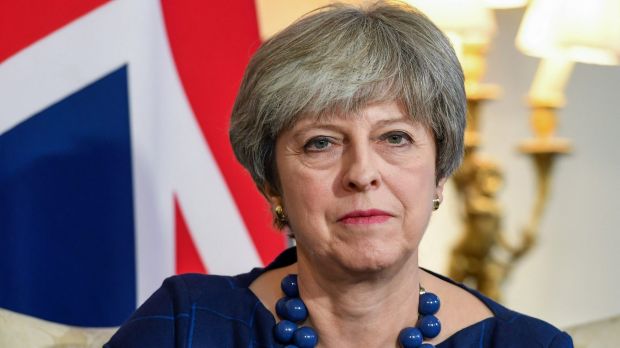 Like Mark Twain’s death, reports of Theresa May’s demise have been greatly exaggerated. Unlike the legendary writer’s death rumours, however, these are more frequent and relentless. Quite how a person of little obvious political skill or charisma, and seemingly little personal support, has managed to soldier on in Britain’s highest political office during a period of more or less consistent crisis, will be as much a matter for political psychologists as historians in the future.
For now, it is enough to occupy ourselves with the return of that perennial British favourite, “Will Theresa Survive?” When she’s not dealing with a crisis of her own making, be it a misjudged election, a botched reshuffle, or the failure to call yet another errant minister to account, Britain’s accidental Prime Minister is usually to be found fire-fighting another round of leadership questions. Or not. The odd thing about these regular leadership issues is just how little we hear from the central figure, Mrs. May herself. Questions are asked, searing articles are penned, a sense of impending crisis is adopted, and some poor soul is shuffled in front of the cameras to make whatever limited case he or she can for the prime minister before the crisis seems to pass. The lady herself, with her pursed lips and dull, thudding phraseology, is nowhere to be seen.
Mrs. May has managed to prove the success of what is in reality a very simple political strategy. Just keep soldiering on. What is often underestimated in analyses of politicians in their insulated environment is just how little radicalism or courage they are willing to show. Caution is the best observed watchword in any political town, and no more so than in Britain’s scarcely beating political heart of Westminster. Most leaders subjected to the sort of crisis-ridden term that Theresa May has had, coupled with the relentless criticism, would have decided to either try and lance the boil with a leadership election ( a tactic once tried by John Major, which saw him re-elected but notably failed to do much lancing) or simply stand down from sheer weariness and stress. Not for nothing is Mrs. May known as the “Maybot”, a term coined by the Guardian’s political sketch writer John Crace. She really does act like some advanced form of AI which has been programmed to go through the motions of Brexit negotiations and will not be distracted from this key task by mere notions of human frailty. Only utter destruction will stop the Maybot in its tracks.
Whether such utter destruction is just round the corner is not yet fully established, but there have once again been rumblings of discontent in Westminster about her leadership. Newspapers report that the chairman of the Conservative backbenchers committee (known as the “1922” committee after the seminal moment in that year when Tory MPs ousted former war leader David Lloyd George) has received nearly enough letters from MPs to spark a leadership election. Commentators have also been dusting off their familiar critiques of the Prime Minister – that she lacks vision, is indecisive, has no idea of what she is doing vis a vis Brexit and cannot control her ministerial colleagues. And her two principal cabinet colleagues, the Foreign Secretary and the Chancellor of the Exchequer, have once again been sparring in public and producing their own versions of government policy.
There are few certainties about any of this other than that Mrs. May will never step down voluntarily, whatever the pressure. When you’ve weathered the sort of disastrous and self-inflicted election defeat that she has, and moreover proved manifestly and publicly incapable of clear leadership on the central issue facing Britain today (Brexit), and still insist on staying in office, you can guarantee nothing else is going to come along to shake that extraordinary self-belief.
The issue is less about Mrs. May now and more about her critics and putative rivals. It isn’t just caution that holds Conservatives back from igniting a leadership election whilst being in a precarious minority government. Both sides are fearful of the alternative. So-called “Remainers” see Mrs. May in all her awkwardness as palpably more acceptable than the flamboyant charlatan Boris Johnson, once again a likely prospect to triumph in a leadership election. The “hard Brexiters” meanwhile worry about the outside prospect of a Remain leader such as Home Secretary Amber Rudd or Defence Secretary Gavin Williamson. There is also the chance that they know the political damage that could well come with the sort of “hard Brexit” they are advocating, and prefer someone else to take the fall.
It is certainly conceivable that Theresa May could well still be prime minister when the Brexit deal – in whatever form – is signed and sealed in 2019. But Remainers in particular might want to consider the advantage of letting full blooded Brexiters have their day in dealing with the turbulent negotiations of the Treaty they campaigned so fulsomely for. Trying to limit the treaty, or make it look like we haven’t really left, may sound like a comforting strategy, but it will leave Remainers on the defensive and give the hard Brexiters a stick with which to beat them for many years to come. If the referendum result is to have any chance of lancing the anti-EU boil and bringing some harmony to the Tory party, it may be best to ditch Mrs. May and give Boris and his ragtag army of true believers full reign.
May's political nihilism
If the New York Times piece from yesterday read like a pretty stunning indictment of Britain in its awkward Brexit negotiation phase, that's nothing to the ire that Philip Stephens has reserved for the prime minister's personal approach. His Financial Times piece yesterday poured unmerry scorn upon her and her works. Most savage was his articulation of her broad political strategy - that she is working to overtun the current narrative of her as a deeply disastrous and accidental prime minister, by ensuring she presides over Britain's exit from the EU, whatever that exit looks like. He goes on -
"Everything else — the nation’s prosperity and security or its standing in the world — is a second order question."
As a destructive, nihilistic political strategy it beggars comparison.
The whole piece is here.
"Everything else — the nation’s prosperity and security or its standing in the world — is a second order question."
As a destructive, nihilistic political strategy it beggars comparison.
The whole piece is here.
Britain's Decline
The New York Times has published a searing piece by Peter Goodman outlining the case for Britain's increasing irrelevance and economic decline post-Brexit vote. Quoting Harvard economist Kenneth Rogoff that we are experiencing possibly the best moment for the global economy since the 1950s, Goodman then goes on to outline the economic outlook for Britain:
Goodman further suggests that Britain is also experiencing a serious decline in influence. He compares the "rock-star" welcome given to President Macron to the distinctly low-key reception of Theresa May's speech. Mind you, his comment that people were leaving her speech early was probably unconnected with the state of British influence, and more closely linked to the tedium of listening to the British Prime Minister speak. Happily for the Special Relationship, Donald Trump appears to have found a way round that. He apparently doesn't let May speak for more than ten seconds in their phone calls.
Britain stands out as one of the weaker performers. Its economy probably expanded by just 1.7 percent last year and is expected to grow by only 1.5 percent this year, according to the International Monetary Fund.
By contrast, the I.M.F. estimates that the United States economy will grow by 2.7 percent this year, and the 19 nations that share the euro currency will collectively expand by 2.2 percent.
Britain’s weak performance is due in large part to market sentiments about Brexit. The vote sent the British pound plunging against both the dollar and the euro. Although the pound has recovered much ground since then, Britain has been choking on the effects of the shift: A net importer of goods, Britain is paying higher prices for products it brings in from Europe, China and elsewhere, contributing to inflation that is running at a 3 percent annual pace.
Goodman further suggests that Britain is also experiencing a serious decline in influence. He compares the "rock-star" welcome given to President Macron to the distinctly low-key reception of Theresa May's speech. Mind you, his comment that people were leaving her speech early was probably unconnected with the state of British influence, and more closely linked to the tedium of listening to the British Prime Minister speak. Happily for the Special Relationship, Donald Trump appears to have found a way round that. He apparently doesn't let May speak for more than ten seconds in their phone calls.
Subscribe to:
Posts (Atom)


Follow Us
Were this world an endless plain, and by sailing eastward we could for ever reach new distances